Lygian People
Quo VadisThe Lygian People are a northern people whose intervention in a war among neighboring kingdoms leads to the capture of their leader’s wife and daughter. Their history explains how Lygia, the daughter, became a hostage in Roman custody and eventually grew up in the household of Aulus Plautius and Pomponia Graecina. The people also belong to the novel’s wider picture of Rome: a distant frontier population recalled in stories of war, and one among many peoples present in the city’s unsettled world after the Great Fire.
Identity and Frontier Background
The account of the Lygian People is told as a history of conflict on the Roman Empire’s northern frontier. Vannius, king of the Suevi, had been expelled from his country and spent time in Rome before Drusus restored him to his throne. He initially ruled and fought successfully, but later preyed on both neighboring peoples and his own subjects. His nephews, Vangio and Sido, resolved to drive him back into exile.
The conflict widened when Vannius called on the Iazyges, while his nephews sought the Lygian People’s help. Enticed by the prospect of booty, they came in such numbers that Claudius became concerned about the security of the frontier. Though unwilling to intervene directly in a war among peoples beyond Roman rule, the emperor instructed Atelius Hister, commander of the Danube legions, to monitor events and prevent the conflict from disturbing Roman peace.
War, Hostages, and Lygia’s Arrival in Rome
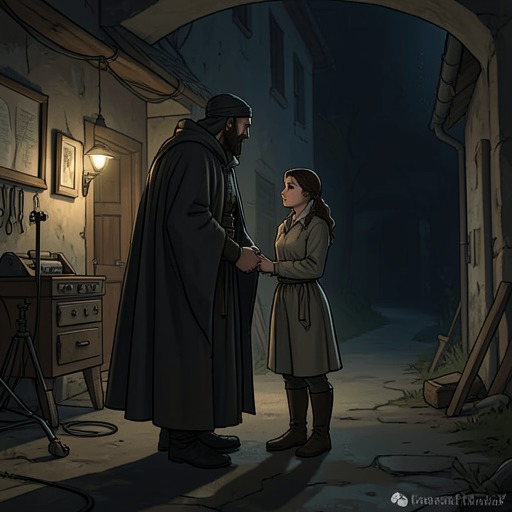
Hister required the Lygian People to promise that they would not cross the Roman boundary. They agreed and gave hostages, including the wife and daughter of their leader. The arrangement placed the women under Roman control while the war continued beyond the frontier.
The Lygian People did not cross the boundary, but they later vanished from the region after defeating Vannius’s Suevi and Iazyges. Their own king fell, and they departed with their booty; the hostages, however, remained in Hister’s hands. The account describes their departure as the point at which a frontier war becomes a personal history for Lygia: her father is dead, her mother soon dies, and she is left in Roman custody.
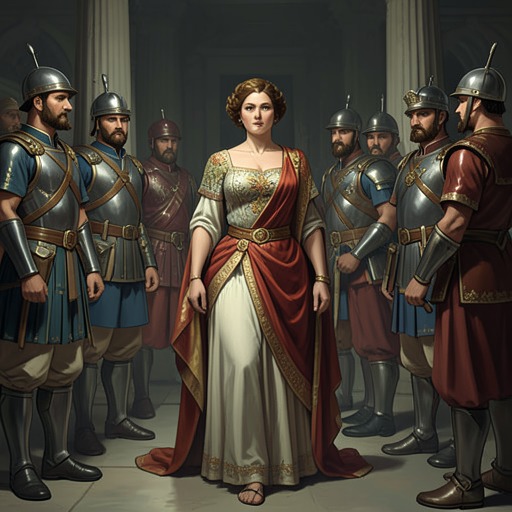
Hister, uncertain what to do with the girl, sent her to Pomponius, governor of Germany. After the war with the Catti, Pomponius returned to Rome and received a triumph from Claudius. Lygia walked behind his triumphal chariot. Since hostages were not legally considered captives, and Pomponius had no definite plan for her, he entrusted her to his sister Pomponia Graecina, the wife of Aulus Plautius. Thus Lygia’s status as a hostage, rather than as a conquered prisoner, shapes the path from the Lygian People’s defeat to her upbringing in a Roman household.
Memory and Narrative Significance
Aulus Plautius later recounts what he had heard from Atelius Hister about the Lygian People, who lived in the darkness of the North. The story gives Lygia a political and familial background before the plot treats her as a young woman in Rome: she is the daughter of a foreign leader and was carried into Roman life by the consequences of war, not by an ordinary household arrangement.
The Lygian People’s history also places Rome’s domestic world in contact with the frontier. Their intervention is driven by the expectation of booty; Roman authorities respond by policing the boundary and taking hostages; and the collapse of their leadership leaves a daughter dependent on Roman officials and patrons. The people are not developed as a continuing presence in the later Roman scenes, but their earlier actions remain consequential through Lygia’s identity and circumstances.
The Lygian People in Rome’s Wider Crisis
During the Great Fire, the narrative again invokes distant peoples as part of Rome’s diverse and unstable population. Stories circulating among the crowds include travelers’ accounts of India, Arabia, and remote regions, while the city itself becomes a gathering place for people displaced by the disaster. The Lygian People are not identified as participants in the fire or its aftermath; their earlier history instead provides one example of the many peoples whose lives intersect with Roman power and the city’s population.
That contrast matters to the organization’s place in the story. The Lygian People first enter the narrative through a war beyond Rome, but the consequences are carried into the capital in the person of Lygia. Rome can secure its frontier by demanding hostages, yet the resulting human ties outlast the immediate conflict: a leader’s daughter grows up in the home of Roman aristocrats, and her origins remain part of the story’s account of identity, displacement, and imperial reach.